Scientists and the Scientific Community: The experiences that shape scientists
Listen to this reading
Did you know that while the personal interests of scientists may seem to have nothing to do with science, the opposite is true? The process of understanding and explaining the natural world is a very human endeavor. As such, it can be influenced by a scientist's cultural outlook, personal challenges, and even hobbies.
On July 7, 2007, the Live Earth concerts took place on all continents. The global event was meant to promote awareness of a "climate in crisis" and featured a range of musical performers, from the Police and Madonna to Kanye West and the Black Eyed Peas, playing at venues around the world. Perhaps the least heralded performance was by the indie rock band Nunatak, who played to a sold-out crowd of 17 people – all of the current residents at the Rothera Research Station on Adelaide Island, Antarctica, one of the most remote places on the planet (Figure 1). The performance was taped and later broadcast to millions of people.
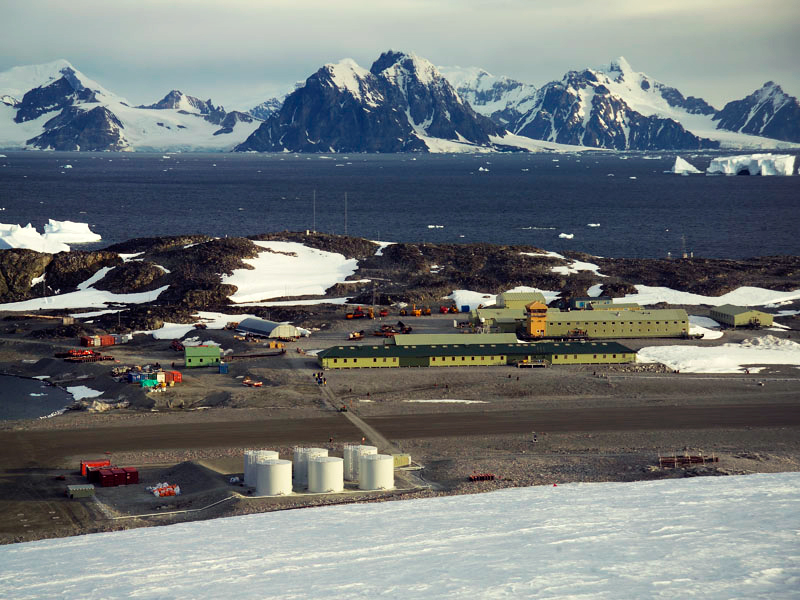
What does this have to do with science? Actually, it has everything to do with science. The band Nunatak consists entirely of scientists and researchers stationed at Rothera: Matt Balmer, an electronics engineer and the lead vocalist; Alison Massey, a marine biologist and saxophonist; Rob Webster, a meteorologist and drummer; Tris Thorne, a communications engineer and violinist; and Roger Stilwell, a polar guide and bass guitarist. As scientists, they were each conducting research on Adelaide Island in 2007. As people who happen to be scientists, however, they are also musicians, and musicians with an interest in promoting awareness of climate change. Participating in Live Earth was a natural outgrowth of their personal and professional interests.
We often forget the human side of scientists, that they are people who, in addition to their professional labels like professor, physicist, or researcher, also have personal labels like musician, cook, hiker, or parent. At first glance, these personal pursuits may seem irrelevant to the process of science. In fact, the opposite is true – science benefits from the creativity and interests of a diverse group of individuals who bring many different points of view to the table. Individual scientists bring all of the strengths and weaknesses of humans to their profession, from creativity in problem solving to the failures of judgment that create problems. But science could not exist without these unique contributions. Individual scientists are influenced by their personal experiences, mentoring, and collaboration, chance events, their diverse perspectives, and their personal judgment. The role of each of these influences is explored in more detail below.
The influence of personal experience
We often think of scientists as people who must be completely removed from emotion in order to perform their work. Indeed, scientists try to remain objective to the outcomes of the research they undertake, but their personal experiences, interests, and background often contribute to the research topics that they pursue. For example, in 2007, Dr. Stefanie Raymond-Whish and several of her colleagues at Northern Arizona University published a paper entitled "Drinking Water with Uranium below the U.S. EPA Water Standard Causes Estrogen Receptor–Dependent Responses in Female Mice." In the paper, they describe a series of experiments in which female mice were exposed to elevated levels of uranium in their drinking water. They found that the mice experienced physical changes similar to those they undergo in response to the hormone estrogen.
Raymond-Whish's personal interest in this topic had nothing to do with mice. She was motivated to conduct this research for other reasons: As a member of the Navajo tribe and resident of the Four Corners region of the Navajo reservation, she and her family had long experienced elevated levels of uranium in their drinking water due to the presence of numerous unreclaimed uranium mines and mills. Her grandmother had died of breast cancer, and her mother had been diagnosed with the disease and survived. She knew that some forms of breast cancer had been linked with high doses of estrogen. Raymond-Whish began her work on mice in order to test the hypothesis that higher-than-normal breast cancer rates among residents of the Four Corners were related to uranium in the drinking water – a hypothesis intimately connected to her personal experiences.
Other scientists come to investigate research questions as new experiences present themselves. For example, Dr. Adam Sylvester is an anthropologist whose research focuses on the origins of bipedalism in hominids, or how humans came to walk upright (Sylvester, 2006). While working on his PhD dissertation, he attended a meeting of the American Association of Physical Anthropologists and was interested in a research poster he saw there. The authors compared the thickness of cortical bone (the dense, outer layer of all bones that gives them strength) in the hands and fingers of the great apes and humans, and found that apes have thicker cortical bone in their hands than humans, possibly a result of the mechanical stress associated with knuckle-walking and tree climbing.
Sylvester, an avid rock climber in addition to an anthropologist, began to wonder if climbers might also have thicker cortical bone in their fingers as a result of the mechanical stress put on them. He knew that there was a tremendous amount of research on the response of bone to mechanical stress, but the mechanisms causing this response were not well understood. From this poster, he was inspired to initiate a study of the hand bones of recreational rock climbers as compared to non-climbers, the factors that might contribute to changes in cortical thickness and strength, and whether these changes had any negative impacts on the hand joints (Sylvester, Christensen, & Kramer, 2006). Through measuring bone strength and width of 4 bones in the hands of 27 recreational rock climbers and 35 non-climbers, the research team found that the climbers did have larger hand bones with greater cortical thickness than non-climbers, but they are at no greater risk of joint problems like osteoarthritis. Sylvester's combination of personal and professional interests led him to think creatively about his research, resulting in a study that contributed to our understanding of stress response in athletes.
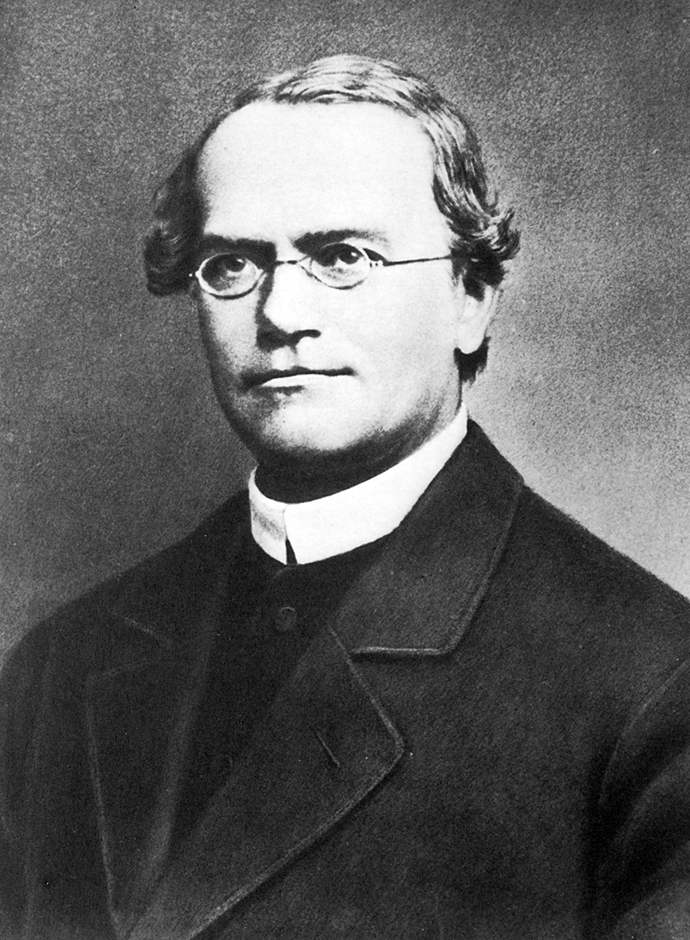
Even those scientists whose personal experiences do not consciously affect their choice of research are influenced by their background and upbringing. For example, most school children learn that Gregor Mendel was an Austrian monk who studied heredity in pea plants (Figure 2). However, few of us learn any details of Mendel's life, resulting in a common misconception of Mendel as an isolated monk and scientist who happened upon pea plants as a research subject by chance. But this is far from true.
Gregor Mendel was born in 1822 in a small village named Hynčice in what is now the Czech Republic. His father was a peasant farmer who raised crops to feed his family and sell for a small profit. As the only son, Gregor was expected to take up his father's profession in farming. However, Mendel demonstrated an early interest and aptitude in school, particularly in natural history. So instead of farming, he went on to study physics, mathematics, and logic at the Philosophical Institute at Olomouc, a prominent college at one of the oldest universities in the Czech Republic. Mendel's family could not afford to pay for his tuition, and financial hardship eventually forced him to withdraw from university.
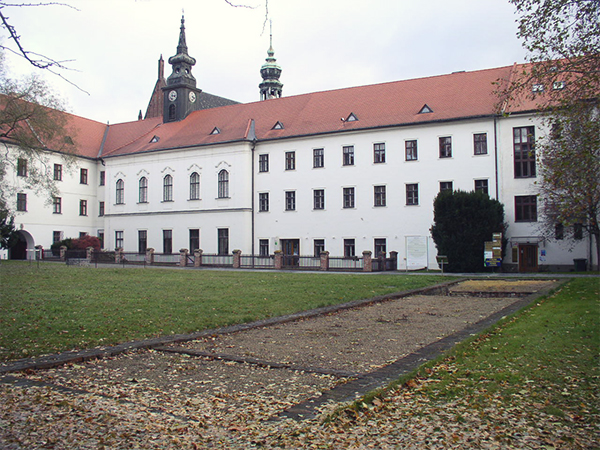
Several of Mendel's teachers recognized potential in the young man and suggested he apply to the Augustinian monastery of St. Thomas at Brno to continue his studies (Figure 3). He was not a particularly religious man, but the monastery was well known as a center for learning in the natural sciences and agriculture due in part to the influence of a scholarly abbot named Cyrill Napp, the monastery's administrator. Abbot Napp was fascinated with understanding breeding better, particularly the role of inheritance in economically important farm animals and plants, and he quickly recognized Mendel's potential as a scholar.
Mendel brought an aptitude for science and experience in farming to the monastery, where he had access to land, greenhouses, and guidance from a mentor interested in making farming more profitable. Napp even provided financial support for Mendel's education, at one point commenting, "I shall not grudge any requisite expense for the furtherance of his training" (Orel & Wood, 2000). When viewed in the context of events and circumstances in his life, Mendel's work on heredity in pea plants (a crop of enormous economic importance then as well as today) is more than just an intellectual exercise – it was fundamentally influenced by his background, culture, and the economics of the time.
Comprehension Checkpoint
The influence of mentoring and collaboration
Mendel could not have done his work without the guidance and mentorship of Abbott Napp. In fact, an essential part of graduate education in the sciences (and an increasingly important part of undergraduate education in science) is strongly mentored research. Students work with an established scientist for a period of time, learning how to collect reliable data in their discipline, training in specialized laboratory or computer analysis procedures, studying data analysis techniques, and gaining experience in many other aspects of science. These skills are difficult to convey in a classroom, and science relies on the personal interaction between mentor and student for passing on not only knowledge, but skills and techniques. In fact, scientists often speak of their scientific "families" in the same way they refer to their real families – students who work with an advisor at the same time are like siblings, and their advisor is like a parent.
Mentoring has always been a part of science. While this might be easy to imagine now, we often have a hard time thinking about the mentoring process when looking back at famous scientists. In addition to Abbott Napp, Mendel worked with a number of scientists at the nearby Brno Philosophical Institute who played a significant role in mentoring him and collaborating with him. He studied under Franz Diebl, a respected expert in agriculture and a teacher of natural science who published several manuscripts on plant breeding. Diebl described a technique for the artificial fertilization of plants, which Mendel read about and later utilized. The technique involved using a small paintbrush to cross-pollinate plants while snipping off the anthers of the plants to prevent natural pollination.
Mendel also worked closely with F. Matthew Klácel, a fellow Augustinian monk who held an appointment as a professor of philosophy and managed the experimental garden at the monastery. Klácel recognized that new plant and animal species that resulted from agricultural (in other words, artificial) crosses were evidence for the concept of change in organisms. This idea contradicted a then-popular view called Fixity of Species, which stated that organisms were unchanging and had appeared on Earth in their current form at the time of creation. The concept of change in organisms was in its infancy when Mendel began his work with peas in 1856; in fact, Charles Darwin's landmark book Origin of Species would not be published until 1859 (see our Charles Darwin I: The Origin of Species module for more information). If organisms did not change over time, as the Fixity of Species idea held, there would be no reason to look at patterns of inheritance in organisms. Thus, the unconventional views of Klácel and others strongly influenced Mendel's work.
Collaboration remains a critical aspect of science today, maybe even more so than in Mendel's day because of the complexity and scope of questions scientists study. When Adam Sylvester, the physical anthropologist, became interested in the effects of rock climbing on bone size, he knew he needed some additional expertise and knowledge, so he turned to two colleagues for collaboration. One was Dr. Angi Christensen, an FBI scientist who had been a fellow graduate student at the University of Tennessee – they shared the same mentor. Dr. Christensen was also a friend and forensic anthropologist with expertise in comparing x-rays of human bones to individualize skeletal remains. Thus, in their study, the data collected from subjects consisted of x-rays of their hands, from which the authors measured and compared bone size. The two also sought out Dr. Patricia Kramer, an anthropologist who studies macaque monkeys as a model to understand the origins and progression of osteoarthritis in humans. The addition of her expertise to the team allowed the researchers to make predictions about the effect of the bone changes they observed on the development of joint diseases in these individuals. Their combined areas of expertise made for a productive collaboration that resulted in the publication of a peer-reviewed journal article. For more information on this article, see the reading guide titled Bone Changes in Rock Climbers.
Comprehension Checkpoint
Though we tend to laud individual scientists for their achievements, it is the rare case that individuals make great achievements without collaborating with other scientists. Scientists constantly work with collaborators at their own institutions and with fellow researchers across the world. In fact, one of the roles of scientific societies is to foster collaboration and improve communication between scientists to facilitate scientific progress (see our Scientific Institutions and Societies module).
The influence of chance and luck
In 1997, Mark Erdmann, a marine biology graduate student, was wandering through an Indonesian fish market with his wife on their honeymoon. She pointed out a strange-looking fish that she had never seen before, and Mark immediately recognized it as a coelacanth – a rare fish that closely resembles fossils from 400 million years ago (Figure 4). Their fish market find proved an important scientific discovery as it was only the second known living population of coelacanths.
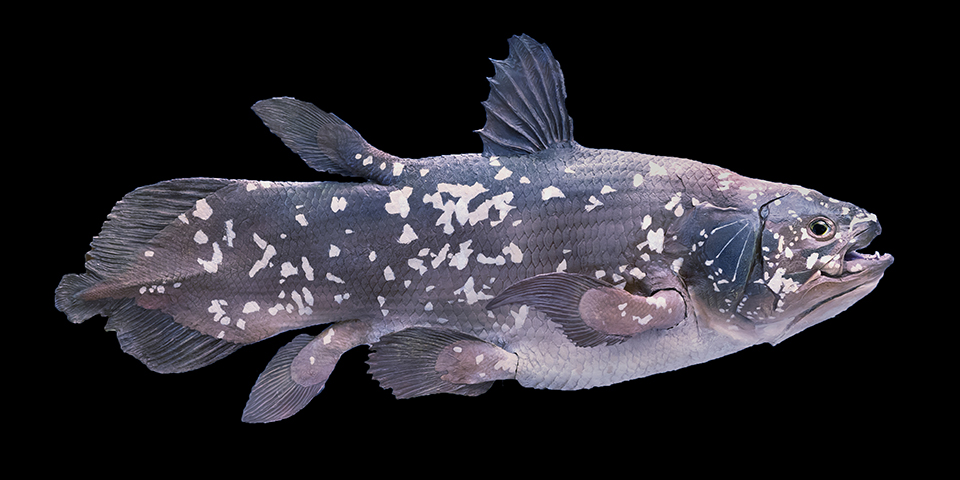
While chance played a big role in this discovery, it was not random or haphazard. Erdmann's interest in marine biology was one of the reasons he was at the fish market in the first place. Louis Pasteur, the French microbiologist, notoriously said, "Chance favors the prepared mind," and he could not have been more correct. Erdmann recognized data that was relevant to his interests when he saw it, even though it may not have been obvious to someone else without Erdmann's expertise.
Likewise, most scientists understand that unexpected outcomes can be significant discoveries in and of themselves, and they are prepared to accept and investigate these occurrences. In 1981, Brian MacMahon, an epidemiologist at Harvard University, came across one such unexpected outcome. He and his colleagues had set out to determine if alcohol or tobacco increased the risk of pancreatic cancer. They asked 369 patients with pancreatic cancer and 644 control patients to complete a survey about their lifestyle habits. The researchers did not find any significant relationships between drinking or smoking and pancreatic cancer. However, their results indicated that survey respondents who had pancreatic cancer were more likely to drink coffee – a relationship they weren't even investigating (MacMahon et al., 1981).
MacMahon pursued the potential link between coffee and pancreatic cancer for many years, and he even stated in an interview that he had given up drinking coffee (Schmeck, 1981). But just because a scientist pursues a research question does not mean that the results will be significant. After more than two decades and 25 published studies of research on the connections between coffee-drinking and pancreatic cancer, the question was resolved. Dominique Michaud, a researcher at the National Cancer Institute, and her colleagues showed that there is in fact no causative link between coffee consumption and pancreatic cancer (Michaud et al., 2001). The correlation that MacMahon and colleagues had originally seen was likely due to confounding factors, such as diet, for which they had not controlled in their original study.
Comprehension Checkpoint
The influence of diversity
You might be discouraged looking at a list of famous scientists – Nobel Prize winners, for example, or members of the National Academy of Sciences. These groups are dominated by men, mostly European and American, mostly white. But look at the membership of any scientific society today, and you will see something much different, and much more diverse. Gender, race, and culture all influence a person as a scientist, but they don't have to stand in the way of anyone becoming a scientist.
In fact, science benefits from a diversity of backgrounds and perspectives. One of the disciplines where gender has played a big role is primate anthropology. Through the 1960s, the family groups of several species of primates were described in the literature as male-dominated, and females of the species were passive and dependent on their more aggressive male counterparts. The authors of these journal articles were all men; in fact, not a single woman received a PhD in the United States in anthropology in the 1960s.
In 1973, Jane Lancaster, an anthropologist who received her PhD at the University of California at Berkeley while studying primate communication, published the article In praise of the achieving female monkey (Lancaster, 1973). The piece proposed a radical notion at the time: that female monkeys could do anything that male monkeys could. Thelma Rowell, a primate biologist, would show that it was female baboons – not males – that determined the route that groups took in their day-to-day foraging (Rowell, 1972). The biological anthropologist Shirley Strum showed that a male baboon's investment in developing relationships with females was more important in terms of reproductive success than the male's rank in the group (Strum, 1974). As more and more women entered the field of anthropology, they continued to challenge the traditional stereotypes of primate behavior (Schiebinger, 2000). Today, largely as a result of the contribution of women in the field, scientists recognize that females provide the social stability in baboon culture while males move from group to group.
Comprehension Checkpoint
The influence of mistakes and misjudgment
Of course, with all the benefits of individuals – our creativity, our diversity, and our ability to capitalize on serendipity – come our downfalls. We can make mistakes. In the mid-1960s, Nikolai Fedyakin, a Soviet physicist working at a laboratory in Kostroma, Russia, observed that water that had condensed in narrow quartz tubes appeared to exhibit peculiar properties, including a very high viscosity similar to that of syrup. Other Soviet scientists heard of the work and reproduced the strange fluid, publishing their findings in science journals (Lippincott, Stromberg, Grant, & Cessac, 1969). The strange form of water was thought to be a rare, polymerized form in which individual molecules bonded together to form long chains that impeded flow, and the new substance was thus nicknamed polywater. By the late 1960s, polywater had ignited a scientific uproar – while some scientists were able to reproduce the results, others could not.
In the early 1970s, Denis Rousseau, a research scientist who was working at the Bell Laboratories at the time, used infrared spectroscopy to show that polywater was not a new form of water. It was just plain water that was contaminated because of dirty glassware and was similar in composition to human sweat (Rousseau & Porto, 1970). Fedyakin made an honest, and very human, mistake – his observations were real, and he was able to reproduce the results; however, he came to the wrong conclusions about his findings. While individuals make mistakes, however, the collective community of scientists corrects those mistakes by repeating experiments and looking further into reported phenomena, as Rousseau did (see our Scientific Ethics module for more on this topic). This review and replication is an essential component of the process of science that ensures that scientific knowledge is reliable.
In addition to making mistakes, scientists are also capable of outright deception. For example, Woo Suk Hwang, a researcher at Seoul National University, and a group of South Korean and American collaborators published a paper in 2004 stating that they had created the first-ever human embryonic stem cell lines that matched the DNA of patients (Hwang et al., 2004). The work was hailed a landmark triumph, and the journal that published the paper, Science, considered naming the research one of their "Breakthroughs of the Year" for 2005. However, after anonymous allegations of data irregularities appeared on a South Korean website, the paper underwent intense scrutiny and was later discredited and withdrawn from the journal. Follow-up investigation has suggested that the researchers participated in fraud by fabricating much of the data that was reported in the manuscript.
Very few scientists perpetrate fraud, just as few people engage in fraudulent behavior in their lives and careers (see our Scientific Ethics module for more on the topic). But as with mistakes, the scientific community helps discover and correct fraud through the processes of replication, open publication, collaboration, and peer review (see our Peer Review module).
Comprehension Checkpoint
Creativity and the scientist
Christopher Edwards, in an article entitled "The right stuff: What distinguishes great scientists," argues that it is not genius that distinguishes great scientists, but open-mindedness and creativity (Edwards, 2000). Many of the examples above highlight that sentiment – none of these scientists are necessarily smarter than others. Instead, they are pursuing their interests creatively and diligently. And progress in science itself depends on the experiences and creativity that individuals bring to their work in seeking answers to research questions. If you would like to read more about the day-to-day operations of a scientist, visit our series titled The Penguin Diaries, which chronicles the daily tasks of a researcher studying the diet of Gentoo and Chinstrap penguins in the Antarctic.
Table of Contents
Activate glossary term highlighting to easily identify key terms within the module. Once highlighted, you can click on these terms to view their definitions.
Activate NGSS annotations to easily identify NGSS standards within the module. Once highlighted, you can click on them to view these standards.